
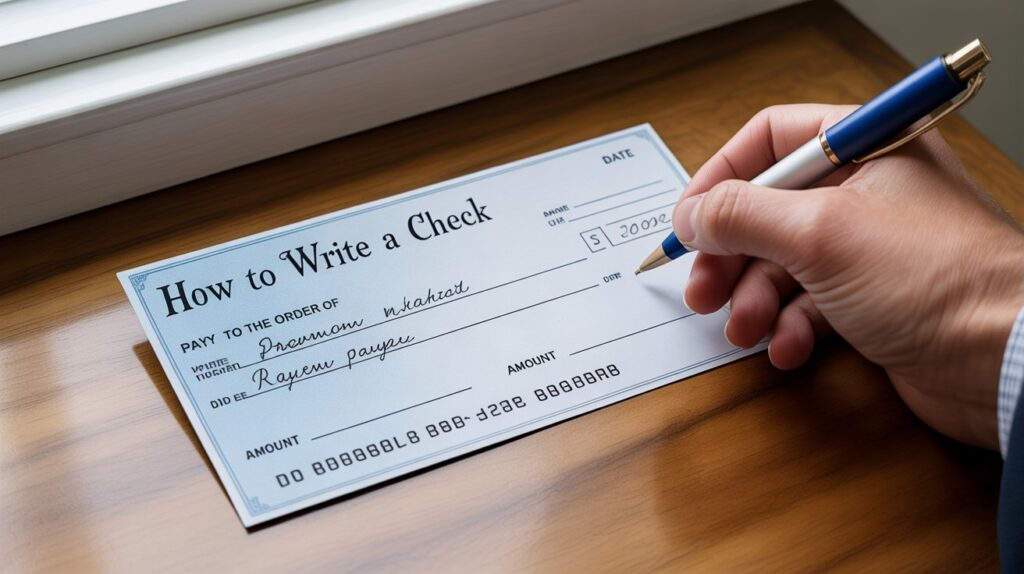
Writing a check may seem like a simple task, yet it remains one of the most important financial skills in personal and business transactions. Despite the rise of digital payments, checks are still widely used for rent payments, official transactions, business dealings, and situations requiring a formal paper trail.
Understanding how to write a check correctly ensures that your payment is processed without errors, delays, or fraud risks. This comprehensive guide walks you through every detail—from basic structure to advanced security tips—so you can confidently write checks in any situation.
Understanding What a Check Is
A check is a written, dated, and signed document that directs a bank to pay a specific amount of money from your account to the person or organization named on the check. It acts as a legally binding financial instrument and provides a secure method of transferring funds.
Checks are typically issued from a checking account and include important details such as the payee’s name, payment amount, date, and signature.
Parts of a Check Explained
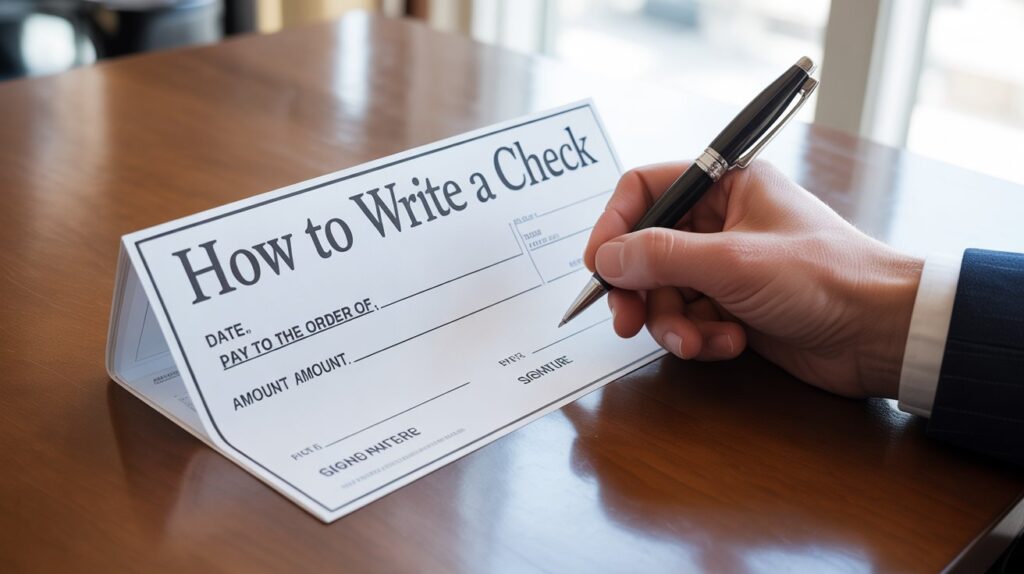
Before learning how to write a check, it is essential to understand its structure. Each section has a specific purpose:
- Date Line – Indicates when the check is issued
- Payee Line (“Pay to the Order of”) – The person or entity receiving the payment
- Amount Box – The payment amount written numerically
- Amount Line – The payment amount written in words
- Memo Line – Optional note explaining the purpose of the check
- Signature Line – Authorizes the transaction
- Routing Number – Identifies your bank
- Account Number – Identifies your account
- Check Number – Unique identifier for the check
Understanding these components ensures accuracy and prevents errors.
Step-by-Step Guide on How to Write a Check
1. Write the Date
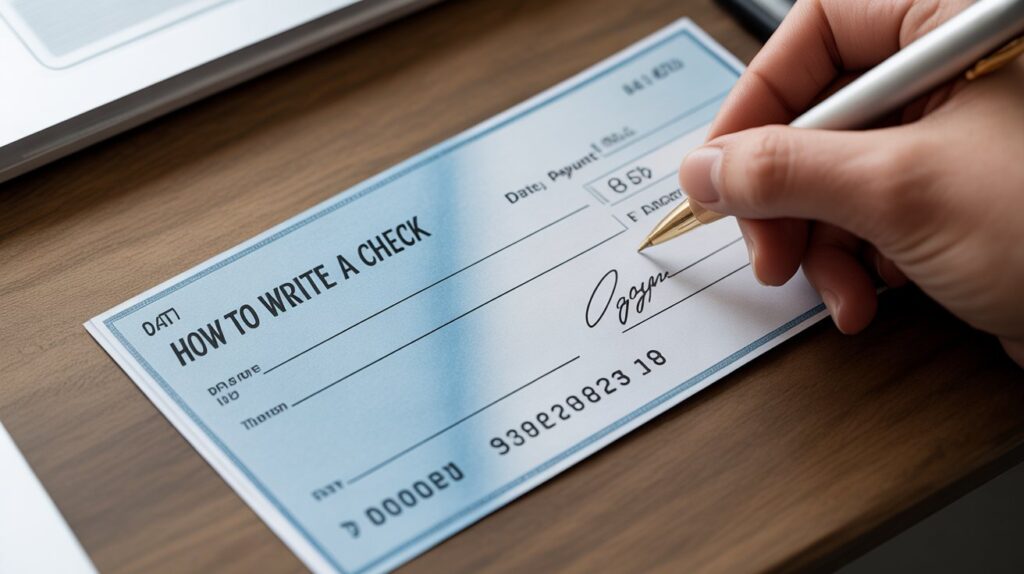
Start by writing the current date on the top right-hand corner of the check. This indicates when the check is issued.
Use a clear format such as:
- April 4, 2026
- 04/04/2026
Avoid postdating checks unless necessary, as some banks may still process them immediately.
2. Add the Payee’s Name
On the line that says “Pay to the Order of,” write the full name of the person or organization you are paying.
Examples:
- John Smith
- ABC Utilities Company
Ensure correct spelling to avoid processing issues.
3. Write the Amount in Numbers
In the small box next to the payee line, write the amount using numbers.
Example:
- 250.75
Always include decimal points and cents for clarity.
4. Write the Amount in Words
Below the payee line, write the amount in words to confirm the numerical value.
Example:
- Two hundred fifty and 75/100
Draw a line after the amount to prevent alterations.
5. Fill in the Memo Line (Optional)
Use the memo line to describe the purpose of the payment.
Examples:
- Rent for April
- Invoice #12345
Though optional, it helps with record-keeping.
6. Sign the Check
Sign your name exactly as it appears on your bank records. Without a signature, the check is invalid.
Example of a Completed Check
Here is a simplified example:
- Date: April 4, 2026
- Payee: John Smith
- Amount (numeric): 250.75
- Amount (words): Two hundred fifty and 75/100
- Memo: Rent
- Signature: Your Name
Common Mistakes to Avoid
Even small errors can cause a check to be rejected. Avoid the following:
- Incorrect spelling of the payee’s name
- Mismatch between numbers and words
- Forgetting to sign the check
- Leaving blank spaces that can be altered
- Using unclear handwriting
Accuracy is crucial for smooth processing.
Security Tips When Writing Checks
Checks can be vulnerable to fraud if not handled carefully. Follow these best practices:
- Use a pen with permanent ink
- Avoid leaving blank spaces
- Write clearly and legibly
- Never sign a blank check
- Store your checkbook securely
- Monitor your bank statements regularly
These precautions reduce the risk of unauthorized transactions.
When Should You Use a Check?
Despite digital alternatives, checks remain useful in several scenarios:
- Paying rent or utilities
- Business transactions
- Government payments
- Situations requiring documentation
- Sending money by mail
They provide a reliable and traceable method of payment.
Advantages and Disadvantages of Using Checks
Advantages
- Provides a clear paper trail
- Secure for large transactions
- No need for electronic devices
- Widely accepted in formal settings
Disadvantages
- Slower processing time
- Risk of loss or theft
- Requires manual effort
- Less convenient than digital payments
Different Types of Checks
Understanding the types of checks helps you choose the right one:
- Personal Checks – Standard checks from your account
- Certified Checks – Verified by the bank
- Cashier’s Checks – Issued by the bank itself
- Traveler’s Checks – Used for travel (less common today)
Each serves a specific purpose depending on the transaction.
Biography Table: Key Information About Checks
| Feature | Description |
|---|---|
| Instrument Type | Financial document |
| Primary Purpose | Transfer of funds |
| Issued By | Account holder |
| Accepted By | Banks and institutions |
| Security Level | Moderate (depends on handling) |
| Processing Time | 1–5 business days |
| Legal Status | Legally binding document |
| Usage Areas | Personal, business, government |
| Required Elements | Date, payee, amount, signature |
| Risk Factors | Fraud, loss, forgery |
How to Void a Check
Voiding a check is sometimes necessary for record-keeping or setting up direct deposits.
Steps:
- Write “VOID” across the check in large letters
- Do not sign the check
- Keep it for your records
This ensures the check cannot be used for payment.
How to Record Checks in Your Register
Maintaining a check register helps track your spending.
Include:
- Date
- Payee
- Amount
- Remaining balance
Accurate records prevent overdrafts and financial confusion.
Check Writing Etiquette
Professionalism matters when issuing checks:
- Use neat handwriting
- Avoid abbreviations unless necessary
- Ensure sufficient funds are available
- Deliver the check promptly
These practices reflect reliability and credibility.
Modern Relevance of Checks
While digital payments dominate, checks remain relevant due to:
- Legal documentation
- Acceptance in formal systems
- Accessibility for non-digital users
They continue to play a vital role in financial transactions worldwide.
FAQs About Writing a Check
1. Can I write a check in pencil?
No. Always use a pen to prevent alterations or fraud.
2. What happens if I make a mistake?
Void the check and write a new one. Avoid corrections.
3. Is the memo line mandatory?
No, but it is helpful for tracking payments.
4. Can someone cash a check without my signature?
No. A signature is required for validity.
5. How long is a check valid?
Typically, checks are valid for six months, though policies may vary.
6. Can I write a check to myself?
Yes. You can write a check to yourself to withdraw or transfer funds.
7. What is a postdated check?
A check written with a future date. However, banks may still process it early.
8. What should I do if I lose a check?
Contact your bank immediately to stop payment.
Last Impression
Writing a check is a foundational financial skill that combines accuracy, responsibility, and attention to detail. While modern payment methods continue to evolve, checks remain a trusted and widely accepted tool in both personal and professional environments.
By understanding each component, following proper steps, and applying security best practices, you can ensure that your checks are processed smoothly and securely. Mastering this skill not only enhances your financial literacy but also reinforces your credibility in formal transactions.