
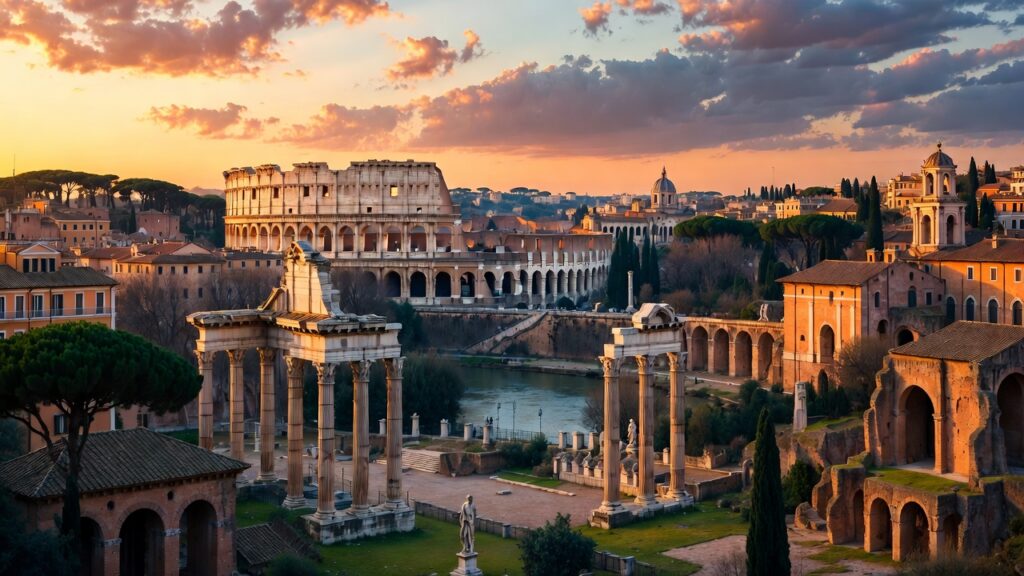
Few cities in the world carry the historical depth, cultural richness, and global influence of Rome. Often referred to as the “Eternal City,” Rome stands as a living chronicle of human civilization, where ancient ruins coexist with vibrant modern life. For more than two millennia, Rome has been a center of power, faith, art, and intellectual progress. From the rise of the Roman Republic to the dominance of the Roman Empire and the cultural renaissance of later centuries, the story of Rome is inseparable from the story of Western civilization itself.
Today, Rome is the capital of Italy and one of the most visited cities in the world. Its streets are lined with monuments, basilicas, fountains, and piazzas that tell the story of empires, philosophers, artists, and ordinary citizens who shaped history. Understanding Rome means understanding the foundations of law, governance, architecture, and culture that still influence modern societies.
This comprehensive article explores the origins, historical evolution, cultural significance, and enduring legacy of Rome, revealing why it remains one of the most remarkable cities ever built.
Biography of Rome: Key Facts
| Category | Information |
|---|---|
| Name | Rome |
| Country | Italy |
| Founded | Traditionally 753 BCE |
| Founder (Legend) | Romulus |
| Nickname | The Eternal City |
| Population | Over 2.8 million residents |
| Area | Approximately 1,285 km² |
| River | Tiber River |
| Famous Landmark | Colosseum |
| Historical Era | Roman Kingdom, Republic, and Empire |
| Religion Center | Roman Catholicism |
| UNESCO Sites | Numerous historic districts and monuments |
This snapshot highlights the fundamental identity of Rome, but the city’s story extends far beyond statistics.
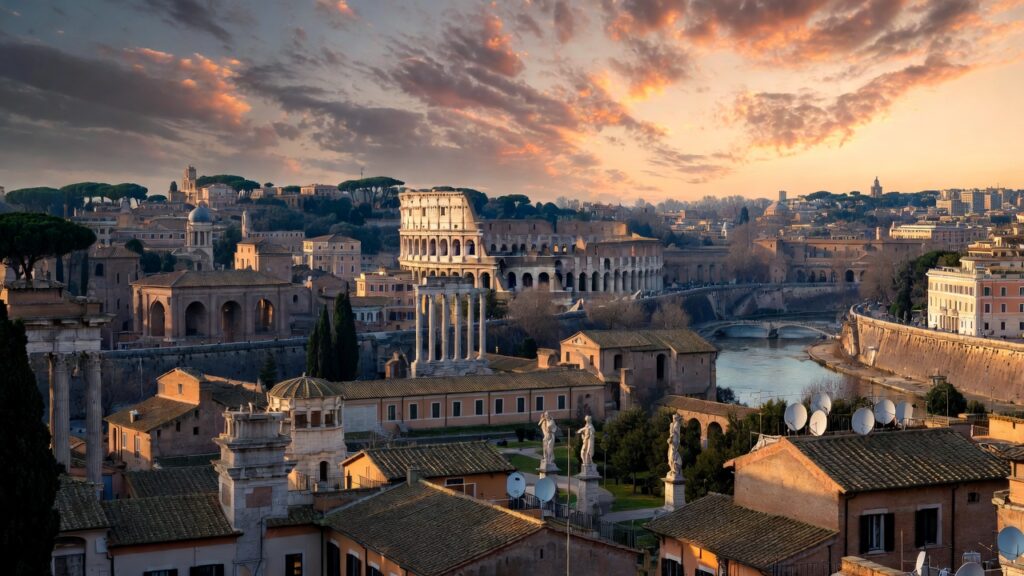
The Legendary Founding of Rome
The origins of Rome are wrapped in myth, legend, and early historical accounts. According to Roman mythology, Rome was founded in 753 BCE by Romulus. The legend tells the story of twin brothers Romulus and Remus, who were abandoned as infants and raised by a she-wolf. As adults, they decided to establish a city near the Tiber River. A conflict between them ended with Romulus killing Remus and becoming the first ruler of Rome.
While this tale belongs to mythology, archaeological evidence confirms that settlements existed in the region long before the traditional founding date. Early communities formed on the hills surrounding the Tiber River, gradually developing into a unified city.
The strategic location of Rome played a crucial role in its growth. Situated near trade routes and the Mediterranean coast while still protected inland, Rome quickly became a hub of commerce and cultural exchange.
Rome During the Roman Kingdom
The earliest political phase of Rome was the Roman Kingdom, which lasted from approximately 753 BCE until 509 BCE. During this period, Rome was ruled by a series of kings who established fundamental institutions and infrastructure.
Key developments during this era included:
- Early religious institutions
- Initial city walls and fortifications
- Social organization between patricians and plebeians
- Basic governmental structures
Though relatively small compared to later centuries, Rome began establishing traditions that would later evolve into the sophisticated systems of the Roman Republic.
The Rise of the Roman Republic
In 509 BCE, Rome transitioned from monarchy to a republic after the overthrow of its last king. The Roman Republic introduced a new political system where elected officials governed the state. This shift dramatically shaped the political identity of Rome.
The republic was structured around several key institutions:
- The Senate
- Popular assemblies
- Consuls and magistrates
These institutions created a complex system of checks and balances that influenced political philosophy for centuries.
During the republican era, Rome expanded its influence across the Italian peninsula and eventually throughout the Mediterranean world. Military victories and strategic alliances transformed Rome from a regional power into a dominant political force.
However, rapid expansion also created internal tensions. Wealth inequality, political rivalries, and civil wars gradually weakened the republic’s stability.
Rome as the Center of the Roman Empire
The transformation of Rome from a republic into an empire marked one of the most significant turning points in world history. In 27 BCE, Octavian—later known as Augustus—became the first emperor of Rome, effectively ending the republican system.
Under imperial rule, Rome reached unprecedented levels of power and prosperity. At its peak, the Roman Empire stretched across Europe, North Africa, and parts of Asia.
During this period, Rome became the administrative and cultural heart of a vast empire. Monumental architecture flourished, including:
- Amphitheaters
- Forums
- Aqueducts
- Public baths
- Temples
The Colosseum, completed in 80 CE, remains one of the most iconic symbols of Rome and Roman engineering.
Infrastructure projects connected the empire through roads and trade networks, reinforcing Rome as the central hub of politics, economy, and culture.
The Cultural Achievements of Rome
Beyond political dominance, Rome made profound contributions to human civilization in law, architecture, literature, and engineering.
Roman law established principles that still influence modern legal systems. Concepts such as citizenship, contracts, and public administration were refined in Rome and later adopted by European societies.
Architecture in Rome revolutionized construction through innovations like:
- Concrete
- The arch
- The dome
- Vaulted ceilings
These innovations allowed Roman engineers to build massive structures that still stand today.
Roman literature also flourished during this time. Writers and philosophers produced works that explored themes of politics, morality, and human nature.
Through art, architecture, and intellectual achievements, Rome created a cultural legacy that continues to shape modern civilization.
The Role of Religion in Rome
Religion played a central role in the identity of Rome throughout its history. In early periods, Romans practiced polytheism, worshipping a pantheon of gods and goddesses associated with natural forces and civic life.
Temples dedicated to these deities filled the city, reinforcing the connection between religion and political authority.
Later, Rome became a crucial center for the spread of Christianity. After the conversion of Emperor Constantine in the fourth century, Christianity gained official recognition within the empire.
Eventually, Rome became the headquarters of the Roman Catholic Church, a role it continues to hold today. This religious significance added another dimension to the city’s global influence.
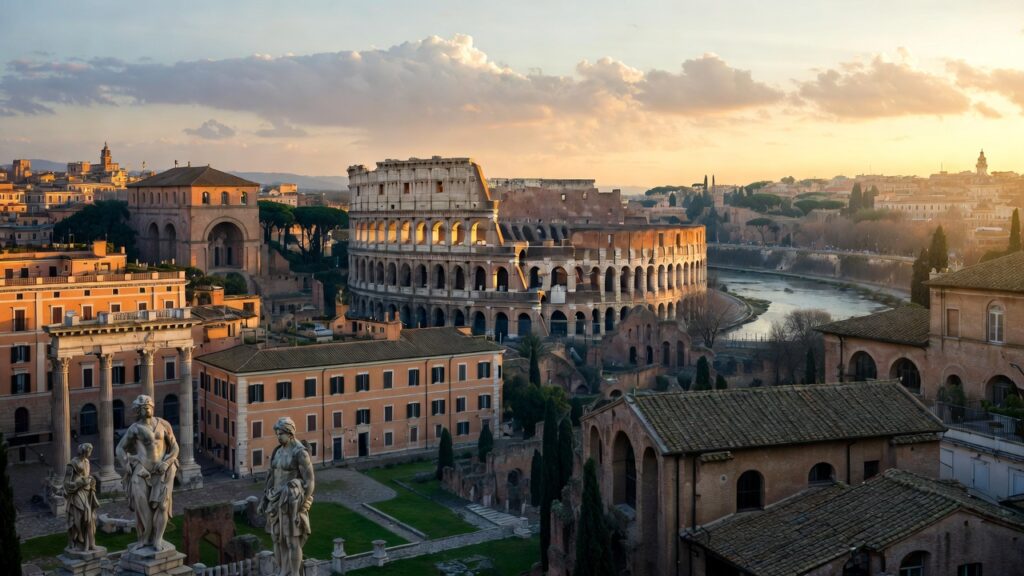
The Fall of the Western Roman Empire
By the fifth century, the political power of Rome had begun to decline. Economic challenges, military pressures, and internal instability weakened the Western Roman Empire.
In 476 CE, the deposition of the last Western Roman emperor symbolized the fall of imperial authority centered in Rome.
Despite this political collapse, Rome did not disappear. The city remained an important cultural and religious center, especially due to the influence of the Catholic Church.
Rome During the Middle Ages
During the medieval period, Rome underwent significant transformation. While its population declined and many ancient buildings fell into ruin, the city remained spiritually important.
Pilgrims from across Europe traveled to Rome, drawn by religious relics and the authority of the papacy.
Medieval Rome saw the construction of churches, basilicas, and religious institutions that would later shape the city’s architectural identity.
Though no longer an imperial capital, Rome retained its reputation as a sacred and historic city.
The Renaissance Revival of Rome
The Renaissance brought renewed artistic and architectural energy to Rome. Wealthy patrons, including popes and noble families, funded major projects that transformed the city into a masterpiece of art and design.
During this period, Rome became a center for some of the greatest artistic achievements in history.
Architects and artists redesigned churches, palaces, and public spaces, blending classical inspiration with Renaissance innovation.
The city once again became a focal point of European culture, attracting scholars, artists, and travelers eager to witness its beauty.
Modern Rome: A Global Capital
Today, Rome functions as the political, cultural, and economic capital of Italy. It is a bustling metropolis that balances modern infrastructure with ancient heritage.
Millions of visitors travel to Rome each year to explore its historic landmarks, museums, and vibrant neighborhoods.
The city offers a remarkable blend of experiences:
- Ancient ruins
- Renaissance art
- Baroque architecture
- Modern Italian culture
Walking through Rome often feels like traveling through layers of history, where centuries of human achievement remain visible in every street and plaza.
Architecture and Landmarks of Rome
The architectural landscape of Rome is unmatched. Few cities in the world preserve such a wide range of historical structures within a single urban environment.
Famous architectural features of Rome include:
- Ancient amphitheaters
- Roman temples
- Renaissance palaces
- Baroque fountains
- Medieval churches
These landmarks collectively illustrate the artistic and engineering brilliance that defined Rome throughout history.
The preservation of these structures has helped maintain Rome as one of the world’s most historically significant cities.
The Culture and Lifestyle of Rome
Life in Rome reflects centuries of cultural development. The city is known for its vibrant street life, traditional cuisine, and strong sense of community.
Cafés, markets, and public squares serve as gathering places where locals socialize and celebrate everyday life.
Cuisine in Rome is particularly famous, featuring dishes rooted in regional traditions and fresh ingredients. Food culture remains an essential aspect of daily life in the city.
Beyond cuisine, Rome also hosts festivals, artistic events, and cultural exhibitions that highlight its ongoing creative spirit.
The Global Legacy of Rome
The influence of Rome extends far beyond Italy. Political systems, architectural styles, and legal traditions across the world trace their origins to the innovations of Rome.
Even today, many languages, legal codes, and cultural practices reflect the legacy of Roman civilization.
Cities across Europe and the Americas contain architectural elements inspired by Rome, demonstrating how deeply its ideas shaped global development.
This enduring legacy explains why historians often describe Rome as one of the most important cities in human history.
Why Rome Is Called the Eternal City
The nickname “Eternal City” captures the timeless character of Rome. Despite invasions, political upheavals, and centuries of change, the city has continuously reinvented itself.
Ancient ruins stand alongside modern buildings, while traditions passed down through generations remain part of everyday life.
This resilience and continuity define the essence of Rome. Few places in the world offer such a powerful connection between past and present.
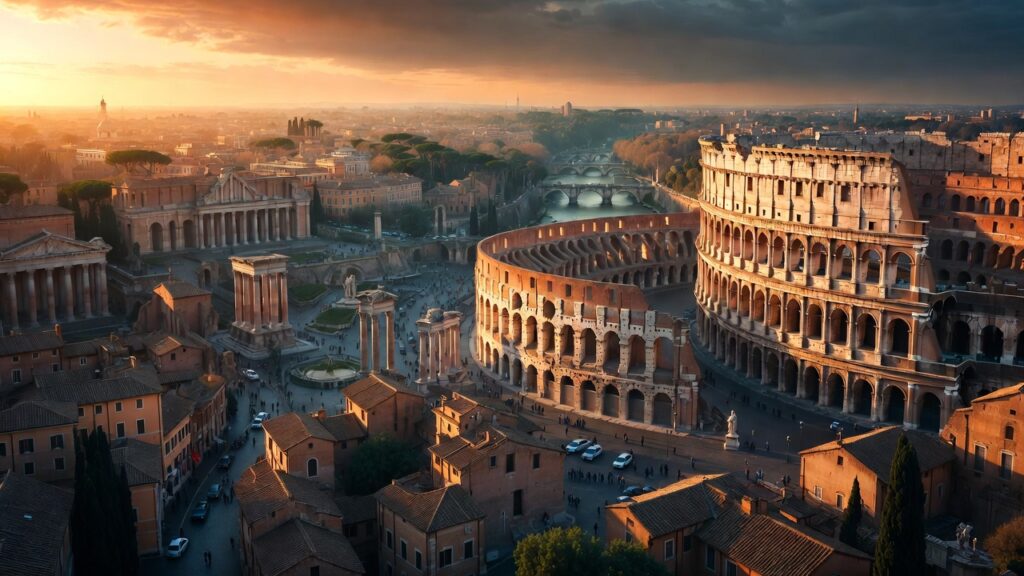
Conclusion
The story of Rome is a story of civilization itself. From legendary beginnings and imperial dominance to artistic brilliance and modern vitality, Rome represents the enduring spirit of human creativity and resilience.
Its influence can be seen in political institutions, architectural designs, cultural traditions, and religious practices around the world.
More than just a city, Rome is a living museum of history—one that continues to inspire scholars, travelers, and dreamers alike.
As long as people remain fascinated by history, art, and culture, Rome will continue to stand proudly as one of the most extraordinary cities ever built.