
How to Write a Check
Writing a paper check may seem old-fashioned in today’s digital world, but it is still an essential financial skill. Whether you are paying rent, sending money to a school, covering a utility bill, or making a donation, knowing how to write a check correctly can save you from mistakes, delays, and banking issues. Many people rely on online banking apps and debit cards, yet checks continue to play an important role in personal and business transactions.
Learning how to write a check is not difficult, but every section matters. A single error can cause a payment to bounce, create confusion, or even expose you to fraud. That is why understanding each step clearly is important. Once you learn the basics, writing checks becomes quick, simple, and secure.
Another reason this skill matters is financial confidence. Many young adults reach a point where they suddenly need to pay for something with a check and realize they never learned the process. From landlords to government offices, there are still many situations where checks are preferred. Knowing how to write a check properly ensures you can handle these situations without stress.
A check acts as a written instruction to your bank. It tells the bank to transfer a specific amount of money from your account to another person or organization. Because checks deal directly with your bank account, accuracy is extremely important. Every field on the check serves a purpose and helps protect both the sender and the recipient.
People often assume checks are becoming irrelevant, but businesses, schools, medical offices, and property owners still use them regularly. In fact, some organizations prefer checks because they provide a clear paper trail. When you understand how to write a check correctly, you also improve your financial organization and recordkeeping.
“A correctly written check is more than a payment method — it is proof of responsibility, accuracy, and financial awareness.”
Understanding What a Check Is
A check is a paper document issued by a bank that authorizes payment from one account to another. When you write a check, you are instructing your bank to pay a certain amount of money to a specific person or business. Checks are linked directly to your checking account, which means the funds must already be available.
Many people confuse checks with money orders or cashier’s checks, but they are different. A personal check uses your own bank account funds, while cashier’s checks are backed directly by the bank. Understanding these differences helps you choose the right payment method for different situations.
Checks also provide legal proof of payment. Once a check is deposited or cashed, it creates a financial record that can be reviewed later if needed. This makes checks useful for rent payments, contracts, tuition fees, and tax-related transactions.
Although digital banking continues to grow, checks remain trusted because they are traceable and secure when used properly. Learning how to write a check correctly helps you avoid banking errors and maintain financial professionalism.
Why People Still Use Checks Today
Even with mobile wallets and online transfers, checks remain widely used in many industries. Some landlords prefer checks because they provide documented payment records. Schools often accept checks for fees and donations, while government agencies may request checks for official payments.
Checks are also useful when electronic payment systems are unavailable. In certain cases, older adults and traditional businesses feel more comfortable using checks because they are familiar and easy to track. For larger payments, some people prefer checks over carrying cash.
Another advantage is security. Unlike cash, a check can only be deposited or cashed by the intended recipient. If lost, you can contact your bank to stop payment before it is processed. This makes checks safer in many situations.
Knowing how to write a check also helps during emergencies. Technology may fail, apps may crash, or payment systems may be temporarily unavailable. A checkbook provides a reliable backup option whenever digital payments are inconvenient.
Parts of a Check You Need to Know
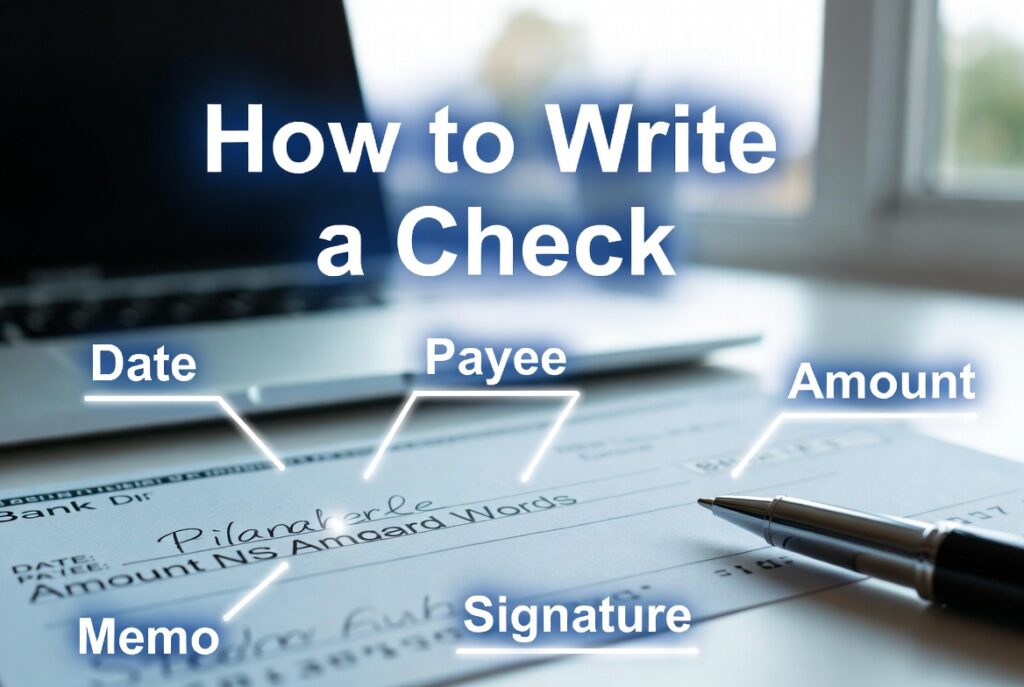
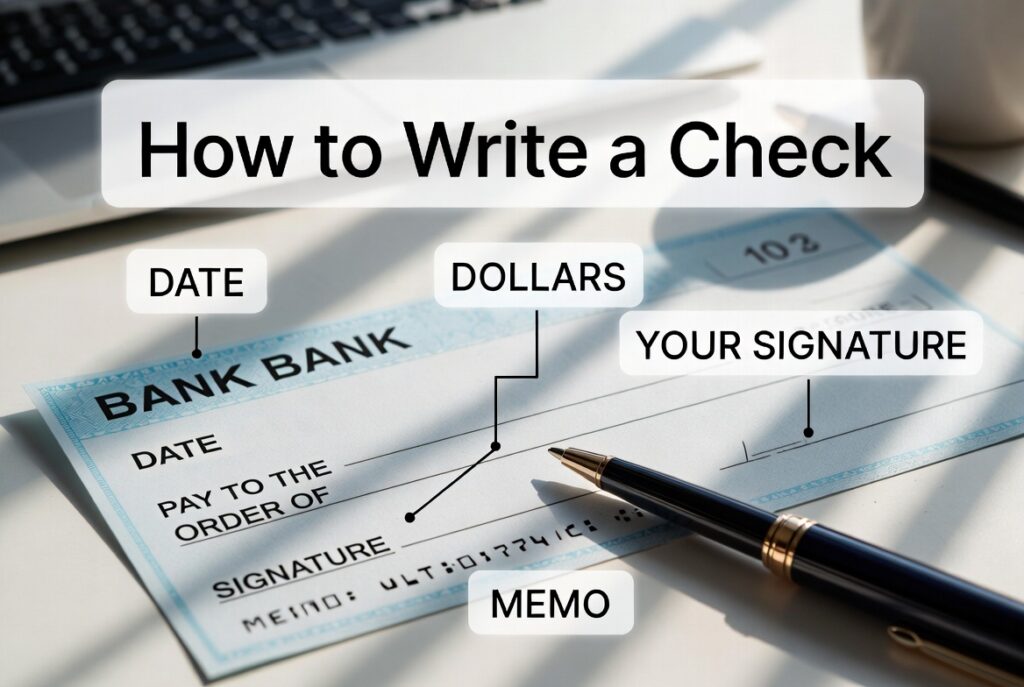
Before learning how to write a check, it helps to understand the main sections found on every check. Each area has a specific purpose, and filling them out properly prevents errors.
The date line appears at the top right corner. This tells the bank when the check was written. The payee line is where you write the name of the person or company receiving payment. Below that is the amount box, where you write the payment amount in numbers.
Another important area is the amount line, where you spell out the amount using words. This serves as a backup in case the numerical amount is unclear. At the bottom right corner is the signature line, which authorizes the payment from your account.
The memo line is optional but helpful. You can use it to mention the purpose of the payment, such as rent, tuition, or invoice numbers. Understanding these sections is the foundation of learning how to write a check accurately.
Step-by-Step Guide on How to Write a Check
The first step is writing the current date on the date line. Most people use the standard month-day-year format. Accurate dates are important because banks rely on them for processing and recordkeeping.
Next, write the name of the person or business receiving the money. Be careful with spelling because incorrect names can delay deposits or cause rejection. Always use the official name whenever possible.
In the amount box, write the payment amount using numbers. For example, if you are paying fifty dollars, write “50.00.” Make sure the writing is clear and fits properly inside the box to prevent tampering.
After that, spell out the amount on the amount line. For fifty dollars, you would write “Fifty and 00/100.” Draw a line through unused space so nobody can add extra words later.
Finally, sign the check using the same signature your bank has on file. Without a signature, the check is invalid. This completes the process of how to write a check correctly.
Importance of Writing Clearly
Handwriting matters more than many people realize. If your writing is messy, banks may misread the amount or recipient name. This can lead to processing delays or rejected checks.
Use blue or black ink whenever possible because pencil can be erased and altered. Permanent ink improves security and makes the check easier to read. Avoid colorful pens that may not scan properly during bank processing.
Clear writing also protects you from fraud. Leaving large empty spaces can allow someone to add extra numbers or words. Keeping entries neat and complete reduces the risk of unauthorized changes.
When learning how to write a check, accuracy and readability are just as important as knowing the correct fields. Taking a few extra seconds to write carefully can prevent major problems later.
Common Mistakes People Make While Writing Checks
One common mistake is forgetting to sign the check. An unsigned check cannot be processed because the bank has no authorization to release funds. Always double-check the signature before handing over the check.
Another mistake is mismatching the numerical amount and written amount. Banks usually follow the written amount if there is a difference, which may create confusion or payment issues.
People also sometimes postdate checks incorrectly. A postdated check contains a future date, but some banks may still process it immediately. This can create overdraft problems if funds are unavailable.
Using nicknames instead of legal names can also cause complications. Businesses especially may refuse checks that are not written exactly to their official registered names.
Understanding these mistakes is an important part of mastering how to write a check safely and professionally.
How to Write a Check for Rent
Rent payments are one of the most common reasons people write checks. When paying rent, always include the landlord’s official name or property management company name exactly as requested.
The memo line is especially useful for rent checks. You can include the apartment number and rental month, such as “May Rent Apt 12B.” This helps landlords organize payments and creates a clear paper trail.
Make sure enough money is available in your account before giving the check to your landlord. A bounced rent check may lead to late fees or financial penalties. Some landlords may even refuse future checks after repeated problems.
Keeping copies or photos of rent checks can also help protect you during disputes. Proper recordkeeping is a smart financial habit that complements learning how to write a check responsibly.
Writing Checks for Bills and Utilities
Many utility companies accept checks for electricity, water, gas, and internet services. Some people prefer checks because they allow better control over payment timing compared to automatic withdrawals.
When paying bills by check, include your account number on the memo line if requested. This helps the company apply the payment correctly to your account.
Mail checks early enough to avoid late fees. Since postal delivery takes time, waiting until the due date can result in delays. Some people mail checks a week in advance to stay safe.
Checks can also help budget-conscious individuals manage spending more carefully. Unlike automatic payments, checks require deliberate action, making you more aware of outgoing expenses.
How to Void a Check Correctly
Sometimes employers or banks request a voided check for direct deposit setup. A voided check cannot be used for payment but still provides banking information like your routing and account numbers.
To void a check, write the word “VOID” in large letters across the front using permanent ink. Make sure the writing does not cover the routing or account numbers at the bottom.
Do not sign a voided check unless specifically requested. Also avoid using correction fluid because it can create confusion or suspicion.
Learning how to write a check includes understanding how to void one safely, since this is a common banking requirement.
Safety Tips for Using Checks
Protecting your checks is extremely important because they contain sensitive financial information. Store your checkbook in a secure location and avoid carrying unnecessary checks in public.
Monitor your bank account regularly for suspicious activity. If you notice unauthorized checks, contact your bank immediately. Quick reporting helps reduce financial damage.
Never leave blank signed checks unattended. A signed blank check gives anyone the ability to fill in an amount and recipient. This creates serious fraud risks.
Using secure mailing methods for important checks is another smart practice. Certified mail or tracked delivery services provide extra security for high-value payments.
Difference Between Personal Checks and Cashier’s Checks
Personal checks come directly from your checking account, while cashier’s checks are guaranteed by the bank. Cashier’s checks are often used for large transactions like car purchases or property deposits.
Some businesses prefer cashier’s checks because they reduce the risk of bounced payments. Since the bank verifies the funds beforehand, cashier’s checks are considered more secure.
Personal checks, however, are more convenient for everyday use. They are ideal for rent, bills, donations, and regular payments. Understanding when to use each option improves financial flexibility.
Knowing how to write a check properly also helps you understand broader banking concepts and payment methods.
How Businesses Use Checks
Businesses frequently use checks for payroll, supplier payments, and operational expenses. Business checks often include company logos and additional security features.
Companies rely on checks because they create organized transaction records. This is useful during audits, tax preparation, and financial reporting.
Many small businesses continue using checks because they are easy to track and integrate into bookkeeping systems. Even modern accounting software often includes check-writing features.
Understanding how checks function in business environments can help young professionals build stronger financial literacy skills.
Digital Alternatives to Checks
Online banking and digital payment apps have reduced check usage in some areas. Services like bank transfers and payment apps offer speed and convenience.
However, digital payments are not always accepted everywhere. Certain landlords, schools, and government offices still require checks or money orders. This is why knowing how to write a check remains relevant.
Digital systems can also experience outages or technical issues. In such situations, checks provide a dependable alternative. Having both digital and traditional payment knowledge creates better financial preparedness.
Instead of replacing checks entirely, digital tools now coexist with them. Smart financial management means understanding both options.
How to Balance Your Checkbook
Balancing a checkbook means tracking the money leaving and entering your account. Every time you write a check, record the amount in your check register.
This helps prevent overspending and overdraft fees. Many people assume their online banking balance is always accurate, but pending checks may not appear immediately.
Regularly reviewing your transactions also helps detect fraud or banking errors. Small mistakes can go unnoticed if accounts are not monitored carefully.
Learning how to write a check should always include learning how to manage your checking account responsibly.
Writing Checks Internationally
International checks can be more complicated because banking systems differ between countries. Currency exchange rates and international processing fees may apply.
Some foreign businesses may refuse personal checks from another country due to fraud concerns or processing delays. In these situations, wire transfers or international money orders are often preferred.
If you must write an international check, confirm the correct payee name and currency requirements beforehand. Mistakes can delay payments significantly.
Understanding international payment practices expands your financial knowledge beyond basic check writing.
When You Should Avoid Writing a Check
There are situations where checks may not be the best option. If immediate payment confirmation is required, electronic transfers are often faster.
Checks can also be risky when shared with untrusted individuals because they contain bank account information. In high-risk situations, secure digital methods may provide better protection.
For very small purchases, checks are usually inconvenient compared to debit cards or cash. Some stores no longer accept checks due to fraud concerns.
Still, checks remain valuable for many formal payments, especially where documentation and traceability matter most.
Benefits of Learning How to Write a Check
Understanding how to write a check gives you more control over your finances. It improves confidence during banking transactions and prepares you for real-world responsibilities.
Checks also teach financial discipline. Since every payment must be recorded carefully, people often become more mindful about budgeting and spending.
Another benefit is professionalism. Writing checks correctly reflects responsibility and attention to detail, especially in business or rental situations.
Financial literacy includes understanding both traditional and modern payment systems. Knowing how to use checks properly is part of becoming financially capable and independent.
Tips for First-Time Check Writers
If you are writing a check for the first time, practice filling out a sample check before using a real one. This helps you become familiar with the layout.
Always double-check names, amounts, and signatures before handing over the check. Even small mistakes can create banking complications.
Keep enough money in your account to cover every check you write. Bounced checks may lead to bank penalties and damaged financial credibility.
It is also smart to keep a record of every check. Many people use mobile banking apps to monitor when checks are deposited or cleared.
Understanding Check Fraud
Check fraud happens when someone illegally alters, steals, or creates fake checks. Criminals may change payment amounts or forge signatures.
One common scam involves stolen mail. Fraudsters sometimes intercept mailed checks and chemically remove ink to rewrite payment details. Using permanent gel ink can reduce this risk.
Another issue is counterfeit checks. These fake checks may look real but are linked to nonexistent accounts. Banks often warn customers to verify suspicious payments carefully.
Knowing how to write a check safely includes understanding fraud prevention techniques and monitoring financial activity regularly.
How Mobile Banking Changed Check Usage
Mobile banking has transformed the way people handle checks. Many banks now allow customers to deposit checks using smartphone cameras.
This feature saves time and reduces trips to physical bank branches. Users simply photograph the front and back of the check through their banking app.
Despite this digital convenience, the process of writing a check itself remains largely unchanged. Accuracy is still necessary because mobile deposits rely on readable information.
Technology has modernized check handling, but the core principles behind how to write a check remain important.
Teaching Teenagers How to Write a Check
Many schools no longer teach practical banking skills, so parents often take responsibility for teaching teenagers how to write checks.
Starting with sample checks can make learning easier. Teens should understand each section of the check and practice writing realistic examples.
Teaching financial responsibility alongside check writing is equally important. Young people should learn about account balances, overdraft fees, and fraud prevention.
Helping teenagers learn how to write a check prepares them for adulthood and encourages smarter money habits.
How Checks Help With Financial Records
Checks provide clear payment documentation that can be reviewed later. This is useful for taxes, rental agreements, donations, and legal matters.
Unlike cash payments, checks leave a banking trail. You can usually view deposited checks online through your bank’s transaction history.
This level of documentation can help settle disputes if someone claims payment was never received. Checks therefore provide both convenience and accountability.
Organized financial records are a major advantage of using checks responsibly.
Writing Checks for Donations
Charities and nonprofit organizations often accept checks because they are easy to document and track. Donation checks also simplify tax reporting.
When writing a donation check, make sure the organization’s official name is correct. Using abbreviations or nicknames can sometimes create deposit issues.
You may also want to include the donation purpose in the memo line, especially if supporting a specific campaign or event.
Learning how to write a check correctly ensures charitable donations are processed smoothly and professionally.
The Future of Check Writing
Checks may not dominate the financial world as they once did, but they are unlikely to disappear completely anytime soon. Many industries still rely on them because of their simplicity and traceability.
Future banking systems may continue integrating checks with digital technology, such as mobile deposits and electronic processing. This blend of old and new systems keeps checks relevant.
Financial literacy experts still encourage learning traditional banking skills because they build stronger understanding of money management.
Knowing how to write a check remains a valuable life skill, even in an increasingly digital economy.
Conclusion
Learning how to write a check is one of the most practical financial skills a person can develop. Even though digital payments are becoming more common, checks continue to play an important role in everyday transactions. From paying rent and bills to making donations and handling business payments, checks remain reliable and widely accepted.
Understanding each section of a check helps prevent costly mistakes and protects against fraud. Writing clearly, using the correct payee name, spelling out amounts accurately, and signing properly all contribute to secure transactions. These simple habits create confidence and financial responsibility.
Checks also offer valuable benefits like recordkeeping, traceability, and payment security. They provide a paper trail that can help resolve disputes and support financial organization. Whether you are a student, employee, business owner, or first-time bank account holder, knowing how to write a check correctly can make daily financial tasks easier and more professional.
As banking technology continues evolving, checks may become less common, but they are still relevant in many real-world situations. By mastering this skill now, you prepare yourself for both traditional and modern financial systems. Financial literacy begins with understanding the basics, and check writing remains one of those essential basics that everyone should know.
FAQs About How to Write a Check
What is the most important step in how to write a check?
The most important step is ensuring all information is accurate, especially the recipient name, amount, and signature. Even small mistakes can delay processing or create payment issues. Always review the check before handing it over.
Can I write a check with a pencil?
No, it is not recommended. Checks should always be written with blue or black permanent ink because pencil marks can be erased or altered easily. Permanent ink helps prevent fraud and improves readability.
What happens if I make a mistake while writing a check?
If you make a small mistake, some banks may allow corrections with initials next to the change. However, the safest option is usually to void the check and start over with a new one. This prevents confusion or rejection.
Is it safe to mail checks?
Yes, but precautions should be taken. Use secure envelopes, avoid leaving outgoing mail unattended, and consider tracked mailing services for important payments. Monitoring your bank account regularly also improves security.
Why do some businesses still prefer checks?
Many businesses prefer checks because they create clear financial records and are easy to track for accounting purposes. Checks also provide documented proof of payment, which is useful during audits and disputes.
Can I write a check without enough money in my account?
Technically yes, but it is a bad idea. If there are insufficient funds, the check may bounce. This can result in overdraft fees, penalties, and damage to your financial reputation.
How long is a check valid?
Most personal checks remain valid for about six months, although policies vary by bank. After that period, banks may refuse to process them. It is best to cash or deposit checks as soon as possible.
What should I write in the memo line?
The memo line can include the reason for payment, such as rent, utilities, tuition, or invoice numbers. While optional, it helps both the sender and recipient keep organized records.