
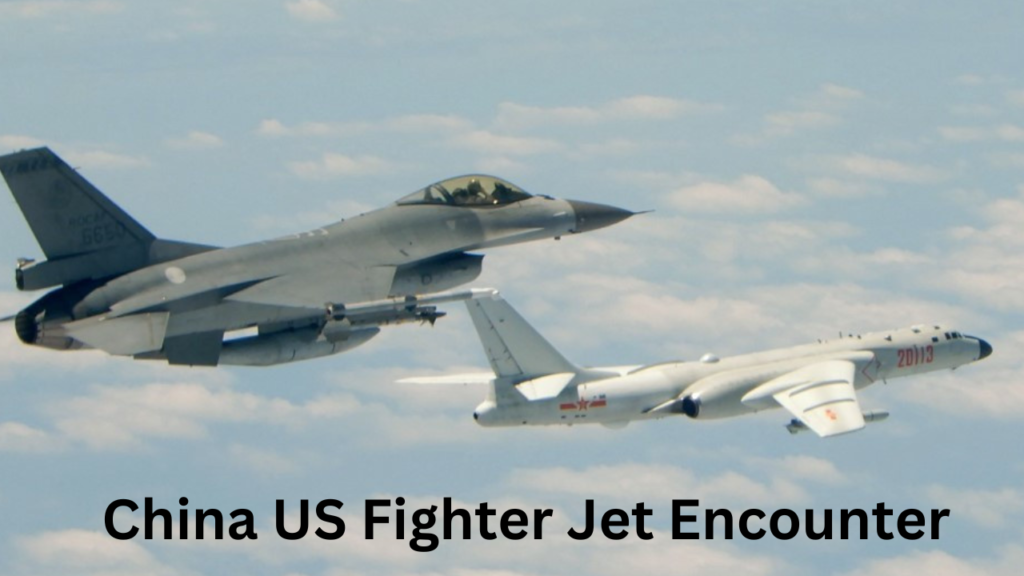
China US Fighter Jet Encounter
The phrase China US fighter jet encounter has become increasingly common in global headlines, reflecting a growing pattern of close military interactions between two of the world’s most powerful nations. These encounters typically involve aircraft from the United States Air Force or United States Navy and the People’s Liberation Army Air Force operating in contested or sensitive airspace, particularly over regions like the South China Sea and the Taiwan Strait.
These interactions are not just routine military maneuvers. A China US fighter jet encounter often carries serious geopolitical implications, raising concerns about miscalculation, escalation, and the delicate balance of power in Asia-Pacific. While many of these incidents are resolved without conflict, the increasing frequency has made them a focal point for analysts, policymakers, and global observers alike.
Historical Background of China US Fighter Jet Encounter
To fully understand the significance of a China US fighter jet encounter, it’s important to look at the historical context. Military interactions between the United States and China date back decades, but tensions in the airspace became more visible toward the late 20th century.
One of the most notable early incidents was the Hainan Island Incident, where a U.S. reconnaissance aircraft collided with a Chinese fighter jet. This event highlighted the risks associated with close aerial encounters and set the tone for future interactions. It also demonstrated how quickly a routine mission could turn into a diplomatic crisis.
Over time, as both countries expanded their military capabilities, the frequency of a China US fighter jet encounter increased. Advances in surveillance, reconnaissance missions, and territorial claims have all contributed to the rising number of incidents.
Strategic Importance of the South China Sea
The South China Sea is one of the most critical areas where a China US fighter jet encounter occurs. This region is not only rich in natural resources but also serves as a major global shipping route.
China claims a significant portion of the South China Sea, while the United States emphasizes freedom of navigation. This difference in perspective creates a situation where military aircraft from both sides operate in close proximity.
Because of its strategic value, any China US fighter jet encounter in this region is closely monitored. Even minor incidents can have ripple effects across international relations, trade, and security dynamics.
Role of Taiwan in Military Encounters
Another hotspot for a China US fighter jet encounter is the Taiwan Strait. Taiwan’s political status remains one of the most sensitive issues in international politics.
The United States maintains unofficial relations with Taiwan and provides defensive support, while China considers Taiwan a part of its territory. This difference leads to frequent military activities near the island.
Aircraft from both sides often conduct patrols and exercises in the area, increasing the likelihood of a China US fighter jet encounter. These interactions are not just about military presence—they are signals of political intent.
Types of Aircraft Involved in Encounters
A typical China US fighter jet encounter involves advanced military aircraft designed for speed, maneuverability, and combat readiness. The United States often deploys jets like the F-22 Raptor and F-35 Lightning II.
On the Chinese side, aircraft such as the Chengdu J-20 and Shenyang J-16 are commonly involved. These jets represent the cutting edge of modern military aviation.
The presence of such advanced aircraft increases both the complexity and the risk of a China US fighter jet encounter. Pilots must rely on training, communication protocols, and split-second decision-making to avoid accidents.
Rules of Engagement and Safety Protocols
Despite the tension surrounding a China US fighter jet encounter, both countries have established protocols to reduce risks. These include maintaining safe distances, using standardized communication signals, and avoiding aggressive maneuvers.
However, interpretations of these rules can differ. What one side considers a routine interception, the other may view as provocative. This difference in perception is a key factor in many incidents.
Efforts have been made to improve communication, including agreements aimed at preventing unintended escalation. Still, the effectiveness of these measures depends on consistent implementation.
Recent Trends in China US Fighter Jet Encounter
In recent years, the number of reported China US fighter jet encounter incidents has increased. This rise is partly due to heightened military activity and evolving geopolitical dynamics.
Both nations have expanded their presence in key regions, leading to more frequent interactions. Advances in technology also mean that aircraft can operate in more complex environments, further increasing the likelihood of encounters.
These trends suggest that a China US fighter jet encounter will remain a regular feature of international relations for the foreseeable future.
Impact on Global Security
The implications of a China US fighter jet encounter extend far beyond the immediate region. These incidents can influence global security, economic stability, and diplomatic relations.
A single miscalculation could escalate into a larger conflict, affecting not just the United States and China but also their allies. This makes each encounter a matter of international concern.
Global markets often react to rising tensions, highlighting the interconnected nature of modern geopolitics. As a result, even a brief China US fighter jet encounter can have wide-ranging effects.
Media Coverage and Public Perception
Media plays a significant role in shaping how a China US fighter jet encounter is perceived. Headlines often emphasize the dramatic aspects, which can influence public opinion and political discourse.
While media coverage brings attention to these incidents, it can sometimes oversimplify complex situations. Understanding the broader context is essential for accurate interpretation.
Public perception, in turn, can impact policy decisions. Governments must balance transparency with strategic communication when addressing a China US fighter jet encounter.

Diplomatic Efforts to Reduce Tensions
Both the United States and China have engaged in diplomatic efforts to manage the risks associated with a China US fighter jet encounter. These include military-to-military dialogues and confidence-building measures.
Such initiatives aim to establish clearer communication channels and reduce misunderstandings. While progress has been made, challenges remain due to differing strategic priorities.
Diplomacy continues to be a crucial tool in preventing escalation. A well-managed China US fighter jet encounter can demonstrate restraint and professionalism.
Quotes from Experts and Officials
“A single misstep in the sky can have consequences on the ground.”
“Military encounters require discipline, communication, and mutual understanding.”
“These interactions are as much about signaling as they are about strategy.”
These perspectives highlight the complexity and importance of every China US fighter jet encounter.
Conclusion
The topic of China US fighter jet encounter is more than just a headline—it represents a critical aspect of modern geopolitics. As both nations continue to assert their presence in key regions, these encounters are likely to persist.
Understanding their causes, risks, and implications is essential for anyone interested in global affairs. While tensions remain, ongoing diplomatic efforts and established protocols provide a framework for managing these interactions.
Ultimately, the future of China US fighter jet encounter incidents will depend on communication, cooperation, and the ability of both sides to navigate a complex and evolving landscape.
FAQs
What is a China US fighter jet encounter
A China US fighter jet encounter refers to close aerial interactions between U.S. and Chinese military aircraft, often in contested regions like the South China Sea.
Why do China US fighter jet encounters happen
These encounters occur due to overlapping military operations, territorial disputes, and strategic positioning by both nations.
Where do China US fighter jet encounters usually occur
Most China US fighter jet encounter incidents happen in the South China Sea and the Taiwan Strait.
Are China US fighter jet encounters dangerous
Yes, they carry risks of miscalculation and escalation, making safety protocols and communication essential.
How are China US fighter jet encounters managed
They are managed through established rules of engagement, communication channels, and diplomatic efforts to reduce tensions.