
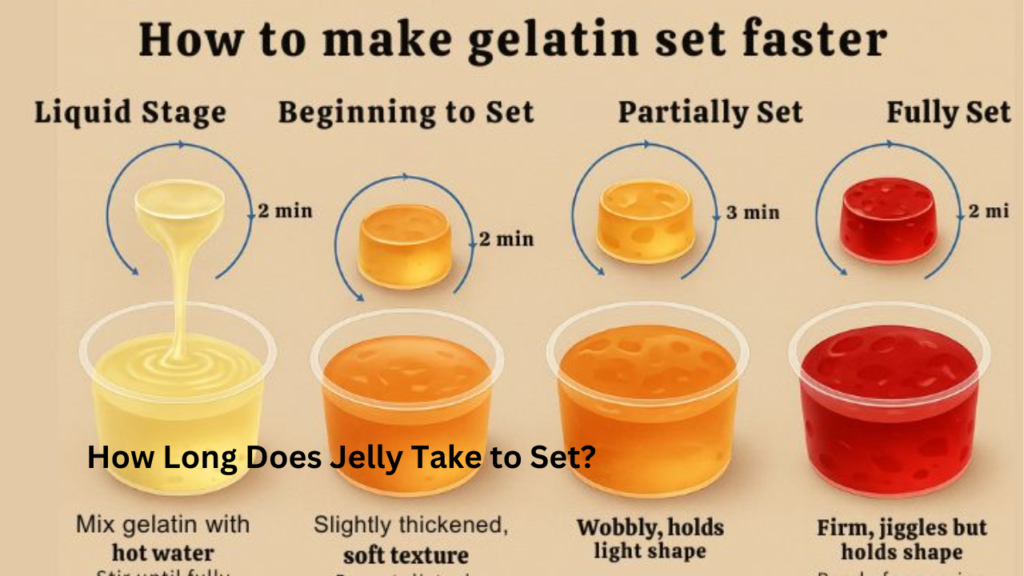
How Long Does Jelly Take to Set
If you’ve ever poured a freshly made liquid jelly into a mold and eagerly waited for it to firm up, you’ve probably asked yourself the same question: how long does jelly take to set? The answer isn’t always as simple as a fixed number. While many recipes suggest a standard timeframe, the reality is that jelly setting depends on a mix of science, ingredients, and environmental conditions.
Jelly is one of those desserts that looks effortless but requires a bit of understanding to get just right. Whether you’re preparing it for a family gathering or simply satisfying a sweet craving, knowing the exact factors that influence the setting process can make a big difference. In this guide, you’ll learn everything in detail—from timing and techniques to expert tips—so you never have to guess again.
Understanding the Basics of Jelly Setting
At its core, jelly is a delicate balance between liquid and structure. When you dissolve gelatin or use natural fruit pectin, you’re essentially creating a network that traps liquid and transforms it into a soft, wobbly solid. This transformation is what gives jelly its signature texture.
When asking how long does jelly take to set, it’s important to understand that the process starts the moment the mixture begins to cool. As the temperature drops, the gelatin proteins slowly link together, forming a mesh that holds the liquid in place. This process takes time, and rushing it often leads to disappointing results.
Average Time Required for Jelly to Set
In most cases, jelly takes around 3 to 4 hours to fully set in the refrigerator. This is the standard timeframe recommended for store-bought gelatin mixes and is generally reliable when instructions are followed correctly.
However, if you’re making jelly from scratch using fresh fruit, the answer to how long does jelly take to set can extend to 4 to 6 hours or even longer. The difference comes down to the natural pectin levels in fruit and how well they interact with sugar and acid during the cooking process.
Factors That Affect Jelly Setting Time
Several variables influence how long does jelly take to set, and understanding them can help you control the outcome more effectively. Temperature is one of the biggest factors. A consistently cold refrigerator speeds up the setting process, while a warmer environment slows it down.
Another important factor is the ratio of ingredients. Too much liquid can weaken the gel structure, while too little gelatin can prevent it from forming altogether. Even the type of container you use matters—shallow dishes allow jelly to cool and set faster than deep molds.
The Role of Temperature in Jelly Setting
Temperature plays a crucial role in determining how long does jelly take to set. Gelatin begins to solidify as it cools, but the ideal setting environment is a refrigerator set at around 4°C (39°F).
If the temperature fluctuates frequently—such as when the fridge door is opened often—the setting process can slow down. On the other hand, placing jelly in the freezer might seem like a shortcut, but it can lead to uneven texture or partial freezing, which ruins the final result.
Can You Speed Up the Setting Process?
It’s natural to want to reduce how long does jelly take to set, especially when you’re in a hurry. One effective method is using an ice bath. By placing your jelly container in a bowl of ice water, you can cool it more quickly without freezing it.
Another option is to slightly increase the gelatin concentration, though this should be done carefully. Too much gelatin can make the jelly rubbery instead of soft and smooth. Quick-set gelatin products are also available and are designed specifically to reduce waiting time.
Common Mistakes That Delay Setting
Many people unintentionally make mistakes that affect how long does jelly take to set. One common issue is not dissolving the gelatin completely in hot liquid. Undissolved particles can prevent a smooth and consistent gel from forming.
Another mistake is adding cold ingredients too quickly. This can interfere with the gelatin’s ability to create a stable structure. Taking your time during preparation can significantly improve both the texture and the setting time.
The Science Behind Gelatin and Pectin
To fully understand how long does jelly take to set, it helps to know the difference between gelatin and pectin. Gelatin is a protein derived from collagen, and it forms a flexible, thermo-reversible gel. This means it can melt and reset multiple times.
Pectin, on the other hand, is found naturally in fruits and requires the right balance of sugar and acid to set properly. This is why fruit-based jellies often take longer to firm up compared to gelatin-based ones.
Tips for Perfectly Set Jelly Every Time
Getting jelly just right doesn’t have to be complicated. A few simple techniques can make a big difference in how long does jelly take to set and the final outcome.
Always measure your ingredients carefully, as even small changes can affect the texture. Use fresh gelatin for the best results, and allow the mixture to cool slightly before placing it in the fridge. Keeping your refrigerator at a stable temperature also ensures a consistent setting process.
As one expert famously said, “Great jelly is not rushed; it’s allowed to become what it’s meant to be.”
How Different Ingredients Impact Setting Time
The ingredients you use play a major role in how long does jelly take to set. Sugar not only adds sweetness but also helps stabilize the gel structure. Without enough sugar, the jelly may remain too soft.
Acidic components like lemon juice can enhance flavor and improve the setting process in pectin-based jellies. However, certain fresh fruits—like pineapple and kiwi—contain enzymes that can break down gelatin, preventing it from setting unless they are cooked first.
Storing Jelly for Best Results
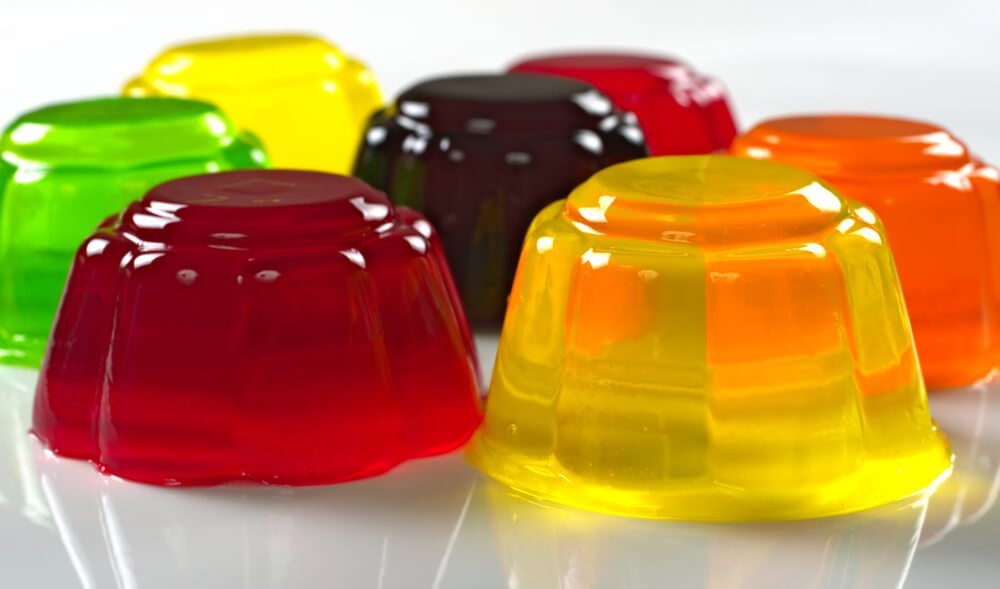
Once your jelly has set, proper storage helps maintain its texture and taste. Keeping it refrigerated ensures that it stays firm and fresh for longer periods.
Leaving jelly at room temperature for too long can cause it to soften or even melt. Covering it also prevents it from absorbing unwanted odors from other foods in the fridge, preserving its flavor.
Troubleshooting Jelly That Won’t Set
Sometimes, despite following all the steps, jelly doesn’t set properly. When this happens, it’s worth reconsidering how long does jelly take to set under your specific conditions.
If your jelly is still liquid after several hours, you can gently reheat it and add more dissolved gelatin. This often fixes the problem and allows the mixture to set correctly on the second attempt.
Creative Uses for Jelly in Desserts
Jelly is more versatile than many people realize. Beyond being a simple dessert, it can be used in layered treats, decorative toppings, and even creative party dishes.
Understanding how long does jelly take to set is especially important when working with layered desserts. Each layer needs enough time to firm up before adding the next, ensuring a clean and visually appealing result.
Conclusion
So, how long does jelly take to set? In general, you can expect it to take about 3 to 4 hours in the refrigerator, though this can vary depending on ingredients and conditions. By paying attention to details like temperature, ratios, and preparation methods, you can achieve perfect results every time.
Making jelly is both a science and an art. With a little patience and the right approach, you’ll be able to create desserts that not only look great but also have the perfect texture.
FAQ Section
How long does jelly take to set in the fridge?
Jelly usually takes about 3 to 4 hours to set in the refrigerator. However, the exact answer to how long does jelly take to set can vary based on ingredients and temperature.
Can I make jelly set faster?
Yes, you can reduce how long does jelly take to set by using an ice bath or quick-set gelatin. Just be careful not to freeze it, as that can affect texture.
Why didn’t my jelly set properly?
If your jelly didn’t set, it could be due to incorrect gelatin ratios, temperature issues, or certain fruits interfering. These factors all influence how long does jelly take to set.
Does homemade jelly take longer to set?
Homemade jelly often takes longer—around 4 to 6 hours—because it relies on natural pectin. This impacts how long does jelly take to set compared to store-bought mixes.
What temperature is best for setting jelly?
The ideal temperature is around 4°C (39°F). Maintaining this helps ensure the correct conditions for how long does jelly take to set and gives you the best results.